


The Somme
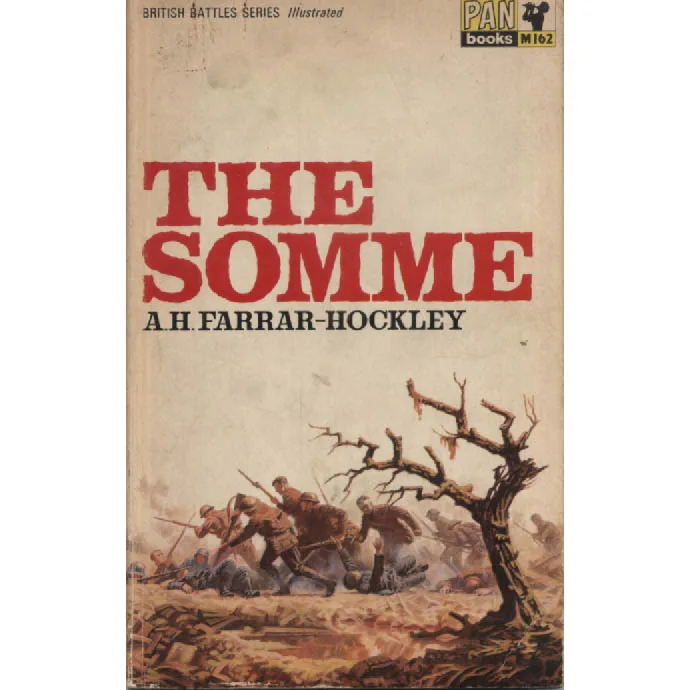
Publisher: Pan Books
Format: Paperback
ISBN: none
Presenting The Somme (1966) by A. H. Farrar-Hockley, published by Pan Books—a field report rendered with the cool nerve of a brigadier and the clarity of a good map. ISBN: none (it’s the sixties; paperbacks marched without barcodes). This copy arrives from the cheerfully plain-spoken Crappy Old Books, graded Condition: Good—pages steady, spine straight, and not a speck of trench mud in sight.
What’s inside? A taut campaign history of 1916’s great offensive, written by a professional soldier who understands both orders and outcomes. Farrar-Hockley walks the ground from Thiepval to Delville Wood, plots the assembly trenches, and tracks the terrible arithmetic of wire, barrage, and belief. He balances the view from the corps map table with the view from the fire step, weighing the plans that looked elegant at dawn against the realities that arrived by noon. Expect timelines that actually line up, dispositions that make sense, and analysis that remembers the human cost without drowning the reader in violins.
Highlights along the trench line:
-
How the plan was built—Kitchener’s New Armies, Haig’s intentions, Joffre’s urgencies, and the logistics of moving an entire county’s worth of men and shells into fifteen miles of France.
-
July 1st, minute by minute—the great barrage, the whistles, the advance, the failures of wire-cutting and creeping fire, and the few sectors where things did not collapse on schedule.
-
Learning under fire—from rigid waves to bite-and-hold; from heroic charges to artillery science, sappers, and the beginnings of combined arms.
-
Names that became arguments—Mametz, Pozieres, Guillemont, Flers-Courcelette (hello, tanks), and a winter that outlasted optimism.
-
Aftermath and reckoning—what the Somme changed in strategy, morale, and memory—why the war that continued afterwards was not the same war that began in June.
The tone is sober, brisk, occasionally ironical in that British-official-history way that lets a single dry sentence do the work of a sermon. Farrar-Hockley neither performs outrage nor offers alibis; he compares intentions to results, and the comparison is eloquent enough.
About this particular volume: Good means honestly kept—cover presentable, corners sensible, pages clean, and a binding that holds like a well-built traverse. If there’s patina, it’s the respectable kind, acquired from desks and rucksacks rather than shellfire.
Buy it if you’ve ever:
-
Wanted the map and the meaning in the same book.
-
Suspected that the Somme is too often discussed with volume instead of detail.
-
Needed a clear guide to why lessons paid for in 1916 changed everything in 1917–18.
-
Appreciated military history that checks the footnotes before it lifts the trumpet.
Why A. H. Farrar-Hockley? Because he writes like a commander who has read the signals log and still walked the ground. Why Pan Books? Because they made serious history portable enough for a kit bag. And why Crappy Old Books? Because behind the cheeky sign is a parade of decidedly un-crappy copies—like this Good one—ready to steady your understanding of the Western Front.
In short: The Somme is a clear-eyed, tightly argued campaign study—strategy, mud, mistakes, and the slow invention of competence—delivered in Good condition from Crappy Old Books, where the only barrage you’ll face is a volley of pages turning.
Keep browsing: See more War books Other books by AH Farrar-Hockley
